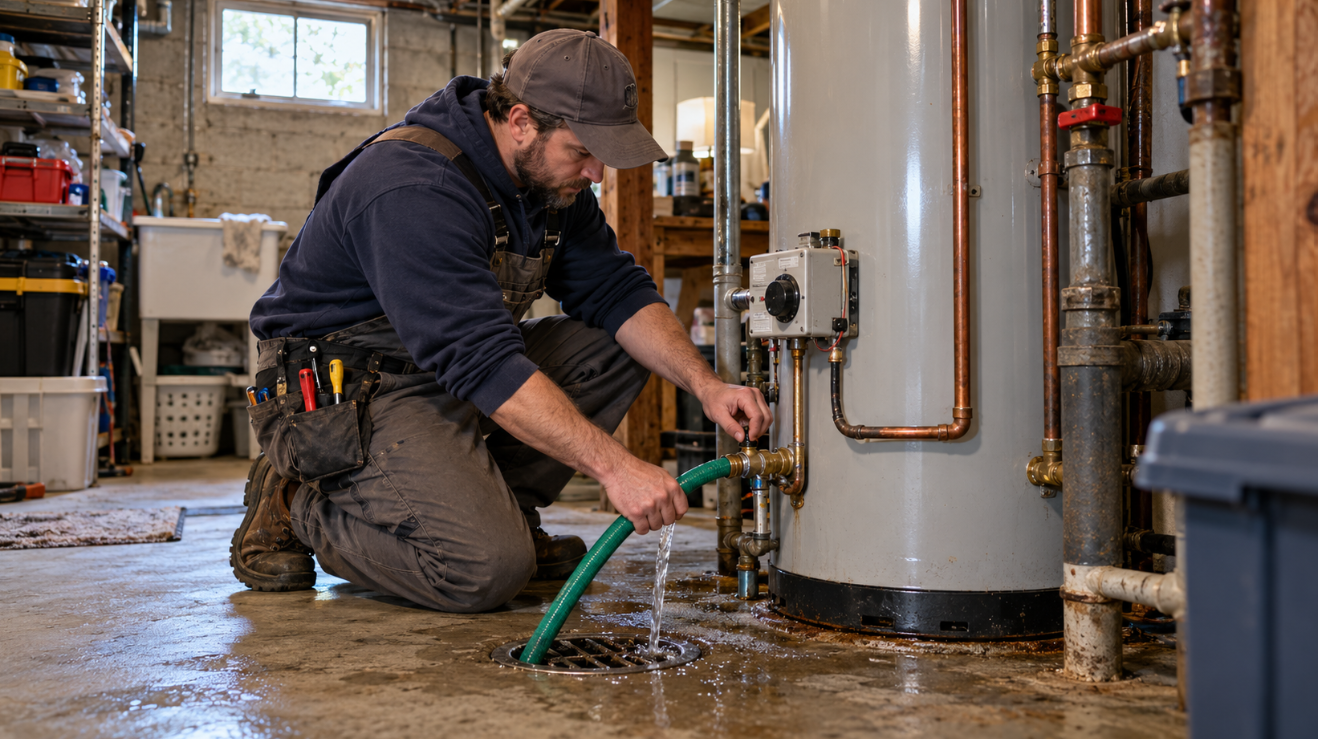
For most homes, flush a conventional tank water heater about once a year. If your water has a high mineral content or you notice signs of sediment buildup, your heater may need attention sooner. At Temp Pros Mechanical, we recommend checking the owner’s manual for the schedule that fits your specific model, since maintenance needs vary by equipment.
The schedule also depends on the type of water heater you have. A tank model needs sediment removed from the bottom of its storage tank. A tankless model usually needs descaling, which addresses mineral deposits in its heat exchanger. Those are different maintenance tasks, so make sure you know which type you have before arranging service.
How Often to Flush a Water Heater
For many tank water heaters, annual flushing is a reasonable starting point. A.O. Smith, a water heater manufacturer, recommends flushing most tank models at least once per year and following the instructions for the specific unit. Its water heater maintenance guide also explains that hard water can call for more frequent flushing.
New Jersey homeowners shouldn’t assume that every home has the same water quality. Mineral levels can vary by water source and plumbing conditions. If you’re on a private well, have a water test available, or know your home has hard water, use that information when deciding whether to adjust the schedule. Your water heater’s manual and a technician familiar with the unit can help you determine the right interval.
If you don’t know when the tank was last flushed, start by checking the heater’s paperwork or asking about its service history. For an older unit with no maintenance record, it’s sensible to have the drain valve and tank condition assessed before attempting a flush yourself.
Why Sediment Builds Up in a Tank
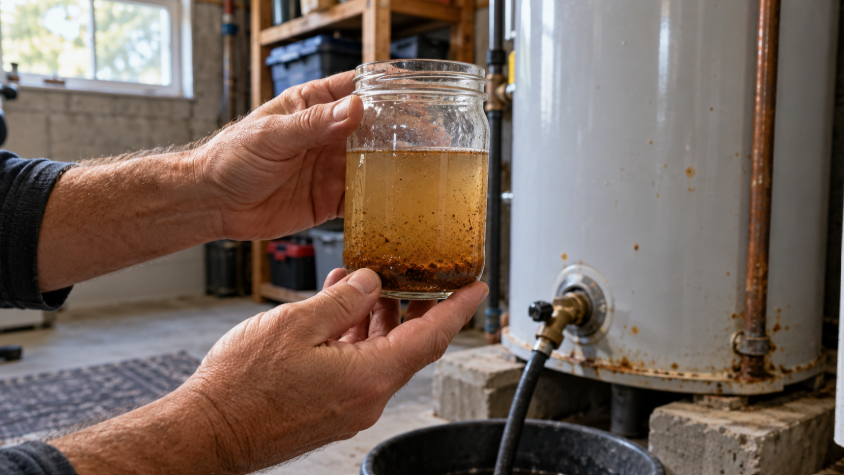
Water carries minerals and other small particles into a storage water heater. Over time, some settle at the bottom of the tank. The amount and speed of buildup depend on the water and the heater.
That sediment can interfere with heat transfer between the burner or heating elements and the water. It can also contribute to rumbling or popping sounds as the heater runs. Noise doesn’t prove sediment is the cause, but it’s a useful reason to have the unit checked.
A flush removes loose material from the tank. It won’t repair a failing component, stop a leak, or reverse corrosion. If the heater is already showing problems, maintenance alone may not solve them.
Signs Your Water Heater May Need Attention
The calendar is one way to plan maintenance, but changes in the heater’s performance can also prompt an inspection. Pay attention to:
- Popping, rumbling, or crackling sounds from the tank
- Hot water that runs out sooner than it used to
- Longer waits for water to heat back up
- Cloudy or discolored hot water
- A drain valve that leaks or doesn’t operate normally
These symptoms can have more than one cause. For example, slow recovery can stem from sediment, a heating element, a thermostat, or household demand. Our article on why a water heater takes so long to reheat covers other possible causes.
A puddle near the heater, active dripping, or a strong gas smell calls for prompt attention. Don’t assume a flush will address a leak or a safety concern.
Tank and Tankless Maintenance Are Different
A tank water heater stores hot water in a reservoir, where sediment can settle. Flushing helps clear that material from the bottom of the tank.
Tankless heaters heat water as it passes through the unit. They don’t have a storage tank to flush, but mineral scale can build up inside the heat exchanger. Many models require periodic descaling, especially where the water contains more minerals. The timing and process depend on the heater’s design and manufacturer instructions.
If you’re not sure whether your system is tank or tankless, check its model label or manual. Temp Pros Mechanical’s Hot Water Systems service covers installation, routine maintenance, and repairs for residential and commercial clients.
Should You Flush It Yourself?
Some homeowners can follow their heater’s maintenance instructions, but draining hot water and working around gas or electrical equipment carries risk. Water in the tank can cause serious burns, and an incorrectly operated drain valve may leak or fail to close. Gas and electrical components add other hazards.
Before attempting any maintenance, read the manual for your exact model. Don’t bypass its shutdown or refill instructions. Never turn an electric water heater back on while the tank is empty or only partly filled, since doing so can damage the heating elements. If you can’t safely identify the controls or direct the discharge water to a suitable drain, schedule service.
An older heater that hasn’t been maintained also deserves caution. A stuck or corroded drain valve can complicate the job, and heavy buildup may not clear easily. A technician can assess the unit and explain whether flushing, another repair, or replacement makes sense.
What to Do Between Flushes
You don’t need to drain the tank frequently just to monitor it. Keep the area around the heater accessible, and look for visible leaks or changes in operation. Note when the heater was last serviced, along with any sounds, water changes, or hot-water interruptions.
Avoid adjusting the temperature or opening service panels as a substitute for maintenance. Follow the manufacturer’s instructions for any routine checks, and leave work involving gas connections, electrical components, or a malfunctioning relief valve to a qualified professional.
If your heater serves a business or a building with heavy hot-water use, its schedule may differ from a typical home’s. Usage patterns, equipment type, and water conditions all matter. Our tune-up and repair service includes inspections, preventive maintenance, and repairs for HVAC systems; contact us to discuss the right service for your hot-water equipment.
Schedule Water Heater Maintenance in Raritan
For most tank water heaters, annual flushing is a sensible baseline, with adjustments based on the manual, mineral content, and what you observe. Tankless systems need descaling rather than a tank flush, and they follow their own maintenance schedules.
If you hear new noises, see a leak, or can’t confirm when the heater was last serviced, contact Temp Pros Mechanical in Raritan to discuss an inspection. Knowing the heater type and model, along with any symptoms you’ve noticed, will help us understand what service may be appropriate.
Leave a Reply