If your air conditioner keeps running but your home still feels warm, the problem usually comes down to weak airflow, a dirty coil, low refrigerant, duct leakage, or a system that is struggling to keep up with the heat. For homeowners in Raritan, NJ, this problem often becomes obvious on hot, humid afternoons.
Before calling for service, check that the thermostat is set to COOL, the fan is on AUTO, the filter is clean, and the vents are open. If the temperature still is not dropping, Temp Pros Mechanical can inspect the system and identify whether the issue is routine maintenance, a repair, or a larger performance problem.
Is It Normal for an Air Conditioner to Run for Hours?
An air conditioner may run for long stretches during severe summer heat. Strong afternoon sun, high humidity, and a low thermostat setting all increase the amount of heat the system must remove.
Long operation is less concerning if the vent air feels cool and the indoor temperature is slowly dropping. There is probably a problem if the thermostat never reaches its setting, the temperature continues rising, or the system runs into the evening without gaining ground.
Weak airflow, room-temperature air, ice, water around the indoor unit, or an inactive outdoor unit also point toward a service issue.
Check the Thermostat First
Make sure the thermostat is set to COOL and the fan is set to AUTO. With the fan set to ON, the indoor blower continues running between cooling cycles. That can sound like nonstop AC operation even when the compressor has shut off.
Set the temperature a few degrees below the current room temperature. Lowering it dramatically will not make a standard system cool faster.
Thermostat location matters too. Direct sunlight or heat from a nearby lamp, television, or kitchen can create a false reading. If the displayed temperature seems wrong, compare it with a separate thermometer placed away from vents and windows.
Common Reasons Your AC Is Running but Not Cooling
Restricted Airflow
A clogged filter limits the air moving across the indoor coil and through the ducts. The AC may stay on, but less conditioned air reaches the rooms. Severe restriction can also contribute to coil freezing.
Inspect the filter under good light. Replace it if it is heavily coated with dust, using the correct dimensions for the system. Do not operate the equipment without a filter.
Check that supply registers are open and return grilles are not blocked by furniture, rugs, curtains, or boxes. Closing several vents to redirect air often creates pressure problems instead of improving comfort.
The ENERGY STAR HVAC maintenance checklist explains that dirty filters raise operating costs and dirty coils reduce cooling ability, causing equipment to run longer. If the filter is clean but airflow remains weak, Temp Pros Mechanical’s tune-up and repair service covers inspections, cleaning, adjustments, and HVAC repairs.
A Frozen Evaporator Coil
Ice on the indoor coil blocks airflow and interferes with heat transfer. You may notice weak air at the vents, frost on the refrigerant line, or water near the indoor unit as the ice melts.
Restricted airflow is one possible cause. Low refrigerant, a dirty coil, or a blower problem can create the same symptom.
Turn cooling mode off if you see ice. Do not chip or scrape it. Let the system thaw and schedule service, especially if it freezes again after the filter has been checked.
A Dirty or Inactive Outdoor Unit
The indoor coil absorbs heat from the house, while the outdoor unit releases it. Dirt, leaves, grass, weeds, and stored items around the condenser restrict that process.
Clear loose debris from around the cabinet and leave room for airflow. Do not remove panels or reach inside the unit.
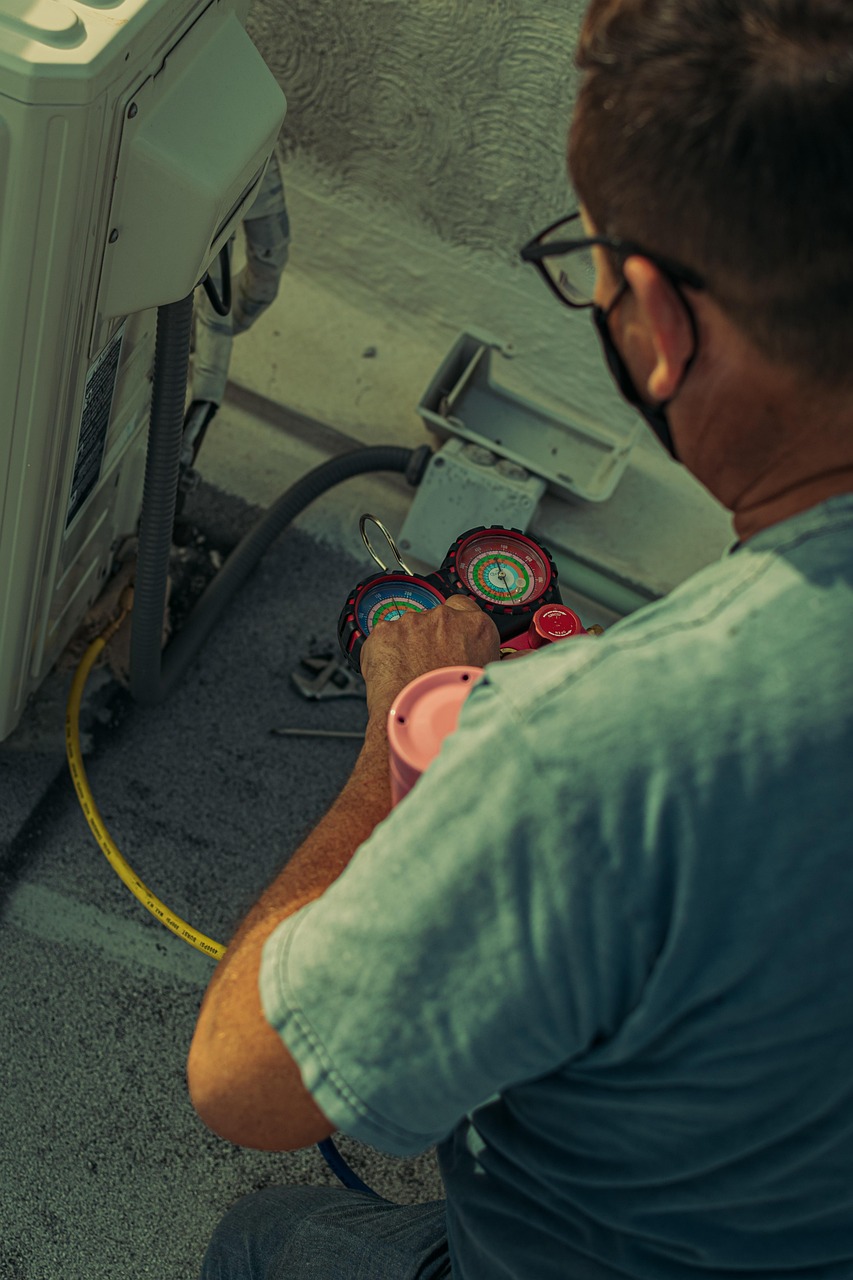
If the indoor blower runs but the outdoor fan and compressor are silent while the thermostat calls for cooling, turn the system off. The cause may involve an electrical control, motor, capacitor, or another component that requires professional diagnosis.
Low Refrigerant or a Mechanical Fault
Refrigerant moves through a sealed system and does not normally get used up. A low charge often points to a leak that must be found before the correct charge is restored.
Low refrigerant can cause long run times, lukewarm vent air, reduced cooling capacity, or ice on the indoor coil. A weak compressor, blower issue, or failing electrical component can produce similar symptoms.
Adding refrigerant without locating the cause is not a complete repair. The system needs to be tested so the actual fault and equipment condition can be evaluated together.
Duct Leakage or Poor Air Distribution
The air conditioner may be producing cold air that never reaches the living space. Disconnected, crushed, leaking, or poorly insulated ducts can lose conditioned air in an attic, basement, crawl space, or wall cavity.
Duct trouble often appears as one floor or room staying much warmer than the rest of the home. Weak airflow at only certain registers also suggests a distribution problem.
Replacing a part at the AC unit will not correct air loss elsewhere in the system, so the ductwork sometimes needs to be included in the inspection.
Heat Gain or Incorrect System Size
A working system can fall behind if the house gains heat faster than the equipment removes it. Strong sun through uncovered windows, air leaks, poor attic insulation, cooking, and frequent door opening all raise the cooling load.
Close blinds on windows receiving direct afternoon sun and make sure exterior doors and windows are fully closed. If the home cools normally in the morning but loses ground every afternoon, heat gain or system capacity may be part of the issue.
An undersized unit may run continuously without reaching the target temperature. An oversized unit usually creates short cycles, uneven comfort, and weak humidity control. Proper sizing requires a residential load calculation based on the building, not square footage alone.
Do not assume constant operation means immediate replacement. Dirty coils, airflow restrictions, duct leakage, and refrigerant problems can make correctly sized equipment behave as though it is too small.
What You Can Safely Check at Home
Before scheduling service:
- Confirm COOL mode and the AUTO fan setting.
- Replace a visibly dirty filter with the correct size.
- Open supply registers and clear return grilles.
- Remove loose debris around the outdoor unit without opening it.
- Look for ice, water, weak airflow, or an inactive outdoor unit.
- Note whether the thermostat temperature is dropping, holding steady, or rising.
Avoid opening electrical compartments, handling refrigerant lines, or repeatedly resetting a breaker.
When to Schedule AC Repair
Schedule service if the system keeps running without lowering the temperature after these checks. The same applies if the coil freezes, airflow stays weak, the outdoor unit does not start, or the equipment develops new mechanical or electrical sounds.
Turn the AC off if you smell burning, see smoke, or a breaker trips again after one reset. Repeated resets do not correct the electrical fault.
Temp Pros Mechanical provides air conditioning installation, maintenance, and repair for residential and commercial properties in Raritan and surrounding areas. A professional inspection separates routine maintenance needs from duct issues, component failures, refrigerant problems, and sizing concerns.
Frequently Asked Questions
Why does my AC run all day without reaching the thermostat setting?
Restricted airflow, dirty coils, low refrigerant, duct leakage, excessive heat gain, or insufficient capacity could be responsible. Long cycles are possible during extreme heat, but the indoor temperature should still make progress.
Should I turn off an AC that is running but not cooling?
Turn it off if you see ice, smell burning, hear severe mechanical noise, or find that the outdoor unit is not operating. If cool air is flowing and the temperature is slowly dropping during extreme heat, the long cycle may be normal.
Does an AC that runs constantly need to be replaced?
Not necessarily. Several repairable conditions cause long run times. Replacement should be considered only after the system’s condition, performance, efficiency, sizing, and repair needs have been evaluated.
Watch the Temperature, Not Just the Run Time
The useful distinction is whether the air conditioner is running for a long time while still lowering the temperature, or running without making progress. Check the controls and airflow first. If the house remains warm, the coil freezes, or the outdoor unit is not operating, the next step is a professional diagnosis rather than a lower thermostat setting.
Leave a Reply